

Occasional numbness or tingling in your arms or legs can be easy to brush off, especially if it seems to come and go without an obvious cause. But when that sensation becomes more frequent, spreads, or lingers longer than expected, it may be worth paying closer attention. At Freedom Chiropractic in Conroe, we regularly work with patients who are trying to figure out whether their numbness or tingling is something that needs professional evaluation, or something that will resolve on its own. Here is how to think through that question and what a chiropractic evaluation can offer if you decide it is time to get checked out. Understanding the difference between a harmless, passing sensation and a sign of something that needs attention can save you a lot of unnecessary worry, and it can also help you get help sooner if help is what you actually need.
Common Causes of Numbness and Tingling
Numbness and tingling, sometimes described as a pins-and-needles sensation, often trace back to pressure or irritation somewhere along a nerve pathway. This can happen for simple, temporary reasons, like sitting with your legs crossed for too long or sleeping in an awkward position that compresses a nerve. In these cases, the sensation usually fades within a few minutes once the pressure is relieved.
More persistent numbness or tingling, however, often points to something happening along the spine. Structural shifts in the neck or lower back can place pressure on nerve roots as they exit the spinal column, and that pressure can radiate outward into the arms, hands, legs, or feet depending on which nerves are affected. This is sometimes related to a bulging or herniated disc, though not always. Repetitive strain from certain jobs or activities, poor posture over long periods, and even old injuries that were never fully addressed can all contribute as well.
Because the underlying causes vary so widely, it helps to look at the full pattern of your symptoms rather than focusing on the sensation alone.
Location matters quite a bit when trying to understand what might be going on. Numbness in the hands and fingers, for example, often traces back to the neck, since nerves that supply the arms and hands originate in the cervical spine. Numbness in the feet or lower legs, on the other hand, more frequently connects to the lower back, where nerves branching off the lumbar spine travel down through the hip and leg. This is part of why we ask detailed questions about exactly where you feel the sensation rather than treating all numbness the same way.
Timing is another useful clue. Numbness that shows up after long periods of sitting, especially at a desk, may point toward posture-related pressure that builds up gradually throughout the day. Numbness that appears at night or upon waking sometimes relates to sleep position or, in some cases, ongoing nerve irritation that becomes more noticeable when your body is at rest.
Where Numbness Commonly Shows Up in Conroe Patients
Hands and Fingers
Tingling or numbness in the hands, particularly if it affects specific fingers rather than the whole hand, often points toward nerve irritation somewhere in the neck or, less commonly, from repetitive strain at the wrist.
Arms
Numbness that radiates down the length of the arm, especially when it follows a specific pattern rather than appearing randomly, can indicate pressure on a nerve root as it exits the cervical spine.
Legs and Feet
Numbness in the legs or feet frequently connects to the lower back and is commonly associated with sciatica, a term used to describe irritation of the sciatic nerve as it travels from the lower spine down through the leg.
One-Sided Versus Two-Sided Symptoms
Numbness affecting one side of the body tends to point toward a localized structural issue, while numbness on both sides at once may suggest a broader pattern that deserves a more thorough evaluation.
How to Tell if It Is Time to See a Chiropractor
Signs That Warrant a Closer Look
- Numbness or tingling that lasts more than a few minutes and returns regularly
- Sensations that spread further down an arm or leg over time
- Weakness accompanying the numbness, such as difficulty gripping objects
- Symptoms that seem to worsen with certain movements or positions
- Numbness that developed after a fall, accident, or new repetitive activity
When It Might Resolve on Its Own
Brief numbness tied to an obvious cause, like sitting in one position too long, that fully resolves within a few minutes once you move typically does not require immediate evaluation. If this becomes a frequent pattern, however, it is still worth mentioning at your next visit.
When to Seek Immediate Medical Attention
Sudden numbness on one side of the body, especially alongside slurred speech, vision changes, or confusion, requires emergency medical attention right away rather than a chiropractic evaluation. Chiropractic care addresses structural and nerve-related causes of numbness, not medical emergencies.
What a Chiropractic Evaluation for Numbness Involves
 When you come in with concerns about numbness or tingling, we start with a detailed conversation about when the sensation began, where exactly you feel it, and what seems to make it better or worse. This information helps narrow down which area of the spine may be involved.
From there, we perform a physical evaluation of your posture, spinal movement, and any areas of restricted mobility. In many cases, we also use on-site X-rays to get a clearer picture of your spinal alignment and identify any structural shifts that could be placing pressure on a nerve.
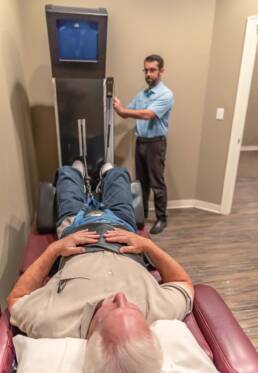
If we find that a disc issue may be contributing to your symptoms, we will talk with you about our approach to disc herniation treatment, which focuses on relieving pressure on the affected nerve rather than only managing the discomfort. For some patients, spinal decompression therapy may also be part of a recommended plan, particularly when a bulging or herniated disc appears to be the source of the pressure.
We also ask about your daily habits and work environment, since repetitive movements or long hours in one position can contribute to or worsen nerve irritation over time. Understanding your day-to-day routine helps us make practical recommendations alongside your treatment plan, rather than offering advice that does not fit how you actually spend your time.
Throughout your visits, we track how your symptoms are changing. Numbness and tingling do not always improve in a straight line, so we pay attention to overall trends rather than expecting every visit to show dramatic progress. Small improvements in frequency or intensity are often a good sign that the treatment plan is working as intended.
Why Addressing the Root Cause Matters
It can be tempting to wait out numbness or tingling, especially if it is not painful. But nerve irritation that goes unaddressed for a long period can sometimes lead to more persistent symptoms or, in some cases, muscle weakness in the affected area. Addressing the structural cause earlier rather than later tends to make treatment more straightforward.
Our structural approach focuses on why the nerve is being irritated in the first place, rather than simply recommending rest and waiting to see if symptoms fade. By correcting the alignment issue placing pressure on the nerve, many patients notice a gradual reduction in numbness and tingling as inflammation settles and normal nerve function returns.
This is also why we ask detailed questions during your first visit rather than jumping straight into treatment. Numbness has enough possible causes that a thoughtful evaluation up front leads to a more accurate and effective plan.
Patience is also part of the process. Nerves that have been under pressure for months or longer sometimes take time to fully recover even after the source of the pressure is addressed. We talk openly with patients about realistic timelines so expectations match what typically happens during recovery, rather than promising an overnight fix that nerve-related symptoms rarely provide.
If you have already tried rest, over-the-counter pain relievers, or stretching without much improvement, that is useful information too. It often tells us that the issue is more structural in nature and less likely to resolve without addressing the underlying alignment directly.
Quick Recap: What to Do About Numbness or Tingling
If you are trying to decide whether your symptoms need attention, keep these points in mind:
- Occasional, brief numbness with an obvious cause often resolves on its own
- Frequent, spreading, or worsening numbness is worth a professional evaluation
- Sudden numbness with other serious symptoms needs emergency care, not a chiropractic visit
- A structural evaluation, including on-site X-rays, can help identify the source
- Addressing the root cause early tends to lead to a smoother recovery
If your numbness seems connected to lower back discomfort or radiates down the leg, our post on treating herniated discs and sciatica pain goes into more detail on that specific pattern and what treatment can look like.
It is also worth remembering that no two cases of numbness are identical, even when the symptoms sound similar on the surface. Two patients describing the same tingling sensation in a hand may end up with very different treatment plans once we understand the full context of their posture, activity level, and health history. This is exactly why a proper evaluation, rather than a quick guess based on symptoms alone, tends to produce better outcomes.
We also encourage patients not to wait for symptoms to become severe before scheduling an evaluation. Mild, intermittent numbness that you have been quietly living with for months is often easier to address than the same issue after it has progressed to constant discomfort or noticeable weakness. Early evaluation tends to mean a simpler, more straightforward path back to normal sensation and function.
Ready to Get to the Bottom of Your Symptoms?
If numbness or tingling has become a regular part of your day, you do not have to just live with it. Our team at Freedom Chiropractic is here to help you understand what might be causing it and whether structural correction could offer relief. Learn more about our team, explore our full range of chiropractic services, or visit our homepage to see how we support patients throughout Conroe. When you are ready, request an appointment and let us help you figure out what your body is trying to tell you.
Ready for a complimentary consultation? Get in touch today!
Much like an engineer, we focus on setting up your body to do the activities that you want to do most. An engineer would make sure a bridge could accommodate Houston traffic, and we will make sure your body can accommodate your favorite sport, family activity, or your next adventure.
Like this article? Spread the word!
Related Posts

Freedom Chiropractic’s Guide to Postpartum Chiropractic Care in Conroe, TX
Recovering after childbirth? Freedom Chiropractic offers postpartum care in Conroe, TX.…

Is Chiropractic Care Safe for Kids? What Conroe Parents Should Know
Wondering if chiropractic care is safe for kids? Freedom Chiropractic explains pediatric…

Freedom Chiropractic’s Guide to Headache and Migraine Relief in Conroe, TX
Struggling with headaches or migraines in Conroe, TX? Freedom Chiropractic looks for the…