

Back and leg pain can show up in a lot of different ways, and two of the most commonly confused culprits are herniated discs and sciatica. Patients often come to us describing the same basic complaint — pain, tingling, or weakness running from the lower back down into the leg — but the actual source of that pain can vary quite a bit.
Understanding the difference matters because it shapes how we approach treatment. In this guide, we’re walking through what separates a herniated disc from sciatica, how the two conditions relate to each other, and how we help patients in Conroe, TX figure out exactly what’s going on before we start treatment.
Why Herniated Discs and Sciatica Are Often Confused in Conroe, TX
It’s easy to see why these two conditions get lumped together. Both can cause pain that radiates into the leg. Both can involve numbness, tingling, or weakness. And both can be aggravated by similar movements, like bending, twisting, or sitting for long periods.
But “herniated disc” and “sciatica” aren’t actually the same thing. A herniated disc refers to a specific structural problem — a disc in the spine that has bulged or ruptured. Sciatica, on the other hand, describes a set of symptoms caused by irritation or compression of the sciatic nerve, which can stem from a herniated disc or from several other sources entirely.
In other words, a herniated disc can cause sciatica, but sciatica doesn’t always come from a herniated disc. That distinction is exactly why an accurate evaluation matters before starting any treatment plan. Treating symptoms without understanding the underlying cause can lead to a plan that offers temporary relief but doesn’t actually resolve what’s driving the pain.
This is especially common because both conditions tend to develop gradually. Many patients don’t experience a single dramatic injury. Instead, symptoms build slowly over weeks or months, which can make it harder to pinpoint exactly when things started or what triggered them. That gradual onset is part of why so many people search for answers online before ever stepping into a clinic — and part of why self-diagnosis based on symptoms alone can be unreliable.
What Is a Herniated Disc?
The spine is made up of vertebrae cushioned by discs that act as shock absorbers. A herniated disc happens when the soft inner material of one of these discs pushes through a tear in the tougher outer layer. This can put pressure on nearby nerves and surrounding tissue, which is where pain and other symptoms come from.
Common Causes of a Herniated Disc
- Gradual disc degeneration related to age and everyday wear and tear
- A sudden awkward twist or strain, especially while lifting something heavy
- Repetitive movements like bending, pulling, or pushing
- Prolonged sitting or driving, which places consistent pressure on the lower spine
- A fall or direct impact to the back
Common Symptoms of a Herniated Disc
- Sharp or shooting pain, often on one side of the body
- Pain that may radiate into the shoulder, arm, buttock, thigh, or leg depending on where the disc is located
- Numbness or tingling along the path of the affected nerve
- Muscle weakness in the area served by the affected nerve
- Pain that intensifies with sneezing, coughing, laughing, or certain positions
Some people with a herniated disc experience very few symptoms, while others feel intense, immediate pain. The location of the herniation plays a big role in how symptoms show up.
What Is Sciatica?
Sciatica isn’t a diagnosis on its own — it’s a symptom pattern caused by irritation of the sciatic nerve, which runs from the lower back through the hips and down each leg. When this nerve becomes compressed or inflamed, it can produce a very distinct type of pain.
Common Causes of Sciatica
- A herniated or bulging disc pressing on the nerve root
- Spinal stenosis, or narrowing of the spinal canal
- Muscle tightness or spasm, particularly in the piriformis muscle deep in the hip
- Bone spurs or degenerative changes in the spine
- Prolonged sitting, poor posture, or repetitive strain
Common Symptoms of Sciatica
- Pain that typically starts in the lower back or buttock and travels down one leg
- A burning, aching, or electric-shock-like sensation along the nerve pathway
- Numbness or tingling that follows a similar path down the leg
- Pain that worsens with prolonged sitting, standing up, or certain movements
- In some cases, weakness in the leg or foot
Because sciatica describes a pattern of symptoms rather than a single underlying cause, treating it effectively means identifying what’s actually irritating the nerve in the first place.
Herniated Disc vs. Sciatica: Key Differences to Look For
While the two conditions can overlap significantly, there are a few patterns that can help you tell them apart. It’s worth remembering that these are general tendencies rather than hard rules — the same underlying issue can present differently from person to person.
Location and Spread of Pain
- Herniated discs often cause pain concentrated closer to the site of the disc itself, though pain can radiate depending on which nerve is affected.
- Sciatica is defined by pain that travels along the sciatic nerve pathway, typically from the lower back or buttock down through the back of the leg.
Type of Sensation
- Herniated disc pain is often described as sharp, stabbing, or shooting.
- Sciatica is frequently described as burning, aching, or an electric, shock-like sensation running down the leg.
What Triggers or Worsens Symptoms
- Herniated disc symptoms often worsen with specific movements like bending forward, twisting, or actions that increase pressure on the affected disc, such as sneezing or coughing.
- Sciatica symptoms are often triggered or worsened by prolonged sitting, standing up after sitting, or certain postures that place pressure on the sciatic nerve.
Where It Shows Up
- A herniated disc in the neck may cause pain in the shoulder and arm rather than the leg.
- Sciatica, by definition, involves the lower back, hip, and leg because it’s tied to the sciatic nerve specifically.
These patterns can offer helpful clues, but they’re not a substitute for a professional evaluation. Overlapping symptoms are common, and the only reliable way to know what’s actually happening is a proper assessment.
Can a Herniated Disc Cause Sciatica?
Yes — a herniated disc is one of the most common causes of sciatica. When a disc in the lower spine bulges or ruptures, it can press directly on the sciatic nerve root, triggering the burning, radiating pain that defines sciatica.
That said, sciatica can also occur without any disc involvement at all. Muscle tightness, spinal narrowing, and other structural issues can all irritate the sciatic nerve independently. This is why we don’t treat “sciatica” as a single, generic condition. Instead, we focus on identifying the actual structural cause behind the symptoms, whether that turns out to be a disc issue or something else entirely.
How We Diagnose Herniated Discs and Sciatica in Conroe, TX
Because the symptoms of these two conditions overlap so much, getting an accurate diagnosis is one of the most important steps in the process. Here’s what that typically looks like for patients visiting us in Conroe, TX.
A Thorough Symptom History
We start by discussing when your symptoms began, what makes them better or worse, and exactly where you feel pain, numbness, or weakness. These details help narrow down which structures in the spine may be involved.
A Hands-On Physical Assessment
We evaluate your posture, range of motion, and reflexes, and we test specific movements that tend to reproduce disc-related or nerve-related symptoms. This helps us differentiate between a disc issue, a nerve compression issue elsewhere, or muscular involvement.
On-Site Diagnostic Imaging
When appropriate, we use on-site X-rays to get a clearer picture of your spine’s structural alignment. This allows us to see how your vertebrae and discs are positioned without having to send you elsewhere and wait on results.
Ruling Out Other Contributing Factors
Because sciatica-type symptoms can stem from muscular tightness, joint issues, or postural imbalances in addition to disc problems, we also look at the broader picture of how your spine, hips, and surrounding muscles are functioning together. This helps us avoid treating a symptom in isolation when a different structural issue nearby may be the actual driver.
Taken together, these steps help us build an accurate picture of what’s actually causing your symptoms, rather than treating the pain as a generic, catch-all diagnosis.
When to See a Chiropractor for Back or Leg Pain in Conroe, TX
Not every ache requires an immediate visit, but certain symptoms are worth addressing sooner rather than later. Consider scheduling an evaluation if you’re experiencing:
- Pain that radiates from your lower back into your buttock, thigh, or leg
- Numbness or tingling that follows a specific path down one leg or arm
- Muscle weakness that makes everyday movements feel more difficult
- Pain that worsens with sitting, standing, coughing, or sneezing
- Symptoms that have lasted more than a few days without improvement
- Pain following a fall, lifting injury, or sudden twisting movement
Waiting out these symptoms can sometimes allow the underlying issue to progress, which is why an early evaluation tends to make treatment more straightforward.
How Freedom Chiropractic Treats Herniated Discs and Sciatica-Related Pain
Our approach centers on structural correction — identifying the root cause of your symptoms rather than simply managing pain as it flares up. Once we’ve confirmed whether a herniated disc, nerve compression, or another structural issue is behind your symptoms, we build a treatment plan around that specific cause.
Depending on your evaluation, this may include:
- Targeted disc herniation treatment techniques designed to relieve pressure on the affected disc and surrounding nerves
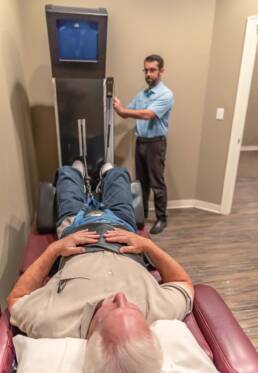
- Stretching and traction-based techniques that help open space between the vertebrae
- Manual adjustments focused on restoring proper structural alignment
- Guidance on posture, movement, and daily habits that may be contributing to nerve irritation
Because sciatica can stem from more than one underlying issue, we don’t apply a one-size-fits-all treatment. Instead, we tailor your care plan to the specific structural cause we identify during your evaluation, then monitor your progress and adjust as needed.
As you move through treatment, we periodically reassess how your symptoms are responding. If pain, numbness, or weakness is improving as expected, we typically space out visits over time. If progress is slower than anticipated, we revisit the evaluation to see whether another factor may be contributing to your symptoms. This ongoing check-in process helps make sure your care plan stays aligned with what your body actually needs, rather than following a fixed timeline regardless of how you’re responding.
Get Clarity on Your Back and Leg Pain in Conroe, TX
Herniated discs and sciatica can feel remarkably similar from the inside, but they don’t always call for the same treatment approach. If you’re dealing with back pain, leg pain, numbness, or tingling and you’re not sure what’s actually causing it, the most useful next step is a proper evaluation rather than guesswork.
We’re here to help patients throughout Conroe, TX get a clear answer and a treatment plan built around their specific symptoms. Contact us to schedule your evaluation and take the first step toward understanding what’s really going on with your spine.
Ready for a complimentary consultation? Get in touch today!
Much like an engineer, we focus on setting up your body to do the activities that you want to do most. An engineer would make sure a bridge could accommodate Houston traffic, and we will make sure your body can accommodate your favorite sport, family activity, or your next adventure.
Like this article? Spread the word!
Related Posts

August 1, 2026
How Often Should You See a Chiropractor? Freedom Chiropractic’s Guide for Conroe, TX Patients
Wondering how often you should see a chiropractor? Freedom Chiropractic breaks down what…

June 2, 2026
Freedom Chiropractic Breaks Down When to Visit a Chiropractor for Back Pain in Conroe, TX
Discover when to visit a chiropractor for back pain in Conroe, TX at Freedom…

June 1, 2026
Freedom Chiropractic: How Chiropractic Care Supports Better Mobility in Conroe
Discover how chiropractic care at Freedom Chiropractic supports better mobility in Conroe…